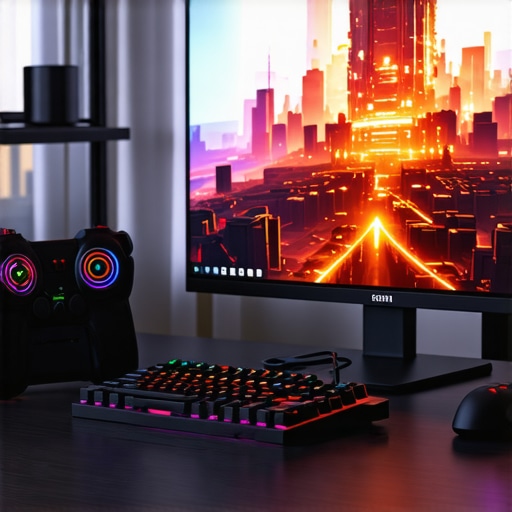
I remember the exact moment I realized my old monitor was holding me back. During a critical gaming session, my screen froze for a split second—a hiccup that cost me the win. Or when I was deep into work, and that annoying lag made me miss deadlines. Frustration bubbled up. That was my lightbulb moment—realizing that the display quality and refresh rate aren’t just tech buzzwords, but essential tools for our daily digital battles.
Why You Can’t Afford to Ignore a High-Refresh-Rate Monitor
Fast-paced gaming and demanding work tasks demand smooth visuals. Enter the 144Hz monitor—an upgrade that transforms your experience from jittery to silky-smooth. But it’s not just about gaming. These monitors enhance multitasking, reduce eye strain, and improve overall efficiency. According to a study by the American Optometric Association, flicker-free high-refresh-rate screens can decrease eye fatigue, making long hours more comfortable.
Is the Hype Around 144Hz Monitors Justified?
Early in my journey, I bought a budget monitor with a 60Hz refresh rate, thinking it would do the job. It worked until I noticed my gameplay felt sluggish, and multitasking became frustrating with screen tearing. The mistake? Underestimating how much visual fluidity impacts both gaming and productivity. Investing in a quality 144Hz IPS monitor changed the game entirely, providing sharper images and much smoother transitions. If you’re tired of lag and want an edge, this post will guide you through selecting the best monitor for your needs, whether for serious gaming or professional work.
Ready to stop settling for less? Let’s dive into what makes these monitors a game-changer and how to find your perfect match for 2024.
Assess Your Needs Clearly
Start by identifying the primary purpose of your monitor. Are you a gamer craving smooth, responsive visuals, or a professional seeking color accuracy and multitasking efficiency? Imagine trying to use a paintbrush for detailed art; selecting the right monitor is like choosing the appropriate tools for your craft. Once I realized my routine mixed gaming and work, I needed a versatile 144Hz IPS monitor that handled both seamlessly. Write down your priorities—speed, color fidelity, screen size, or connectivity—to streamline your search.
Research and Set Your Budget
Don’t get lost in the vast sea of options without a clear budget. Think of it as shopping for a car; knowing your price range saves time and prevents frustration. For high-performance gaming, investing in a 144Hz gaming monitor provides smooth motion, but for productivity, a quality work monitor with similar specs might be more cost-effective. Use comparison sites or review aggregators to identify models within your budget that meet your core needs. It’s better to invest a bit more upfront than to settle for a subpar experience that leads to eye strain or lag issues.
Evaluate Technical Specifications Carefully
Understanding what makes a monitor tick is like decoding a recipe—every ingredient impacts the final dish. Focus on refresh rate, response time, panel type, resolution, and connectivity. For instance, a fast IPS panel offers both color accuracy and quick response, ideal for both gaming and detailed work. Avoid falling for marketing jargon; instead, cross-reference specs with real-world reviews. I once ordered what was touted as a 144Hz monitor but received a model with a 75Hz refresh rate; the disappointment was real, reinforcing the importance of reading detailed specs.
Test Before Committing
If possible, visit a store to see the monitors in action. Imagine trying on clothes without trying them on; it’s a gamble. Look for smoothness in motion, clarity in images, and comfortable viewing angles. When I tested a popular gaming monitor, I used a demo game to see the responsiveness firsthand. Pay attention to how dark scenes are rendered and whether scrolling feels fluid. If a store visit isn’t feasible, buy from a retailer with a good return policy. Be prepared to test the monitor at home and return it if it doesn’t meet your expectations.
Optimize Your Setup for Best Performance
Once you have your new monitor, adjustments are key. Calibrate color, tweak refresh rate settings, and position the display at eye level. Think of this step as tuning a musical instrument—precision yields the best harmony. Use the monitor’s built-in software or third-party tools to enhance clarity and color accuracy. For example, setting the correct resolution and enabling adaptive sync technologies can minimize lag and tearing, creating a seamless visual experience. My first custom setup reduced eye fatigue significantly, enabling longer work and gaming sessions without discomfort.
Maintain and Update Regularly
Like any tech, monitors benefit from regular firmware updates and cleaning. Keep firmware up to date via manufacturer websites or bundled utilities. Clean the screen gently with a microfiber cloth—avoid harsh chemicals that could damage coatings. Routine maintenance ensures longevity and consistent performance, saving you from premature replacements. I learned this the hard way when neglecting dust buildup caused overheating issues that affected display quality. Consistent care extends the lifespan of your investment, keeping your workspace or gaming setup optimal.
Even seasoned users often fall into pitfalls when choosing or optimizing their monitors. Many believe that higher refresh rates automatically mean better performance, but overlooking factors like response time and panel technology can lead to disappointment. For instance, some assume IPS panels are always superior because of color accuracy, yet in gaming, TN panels can offer lower response times that matter more. Also, the myth that 144Hz monitors are only for gamers neglects their benefits for professionals seeking smoother workflows. Let’s address these misconceptions to help you make truly informed decisions.
Is a high refresh rate worth it if my graphics card can’t keep up?
It’s a common mistake to upgrade your monitor without considering your GPU’s capabilities. A 144Hz monitor won’t display its full potential if your graphics card struggles to deliver consistent frame rates. This mismatch can cause issues like screen tearing and stuttering, which negate the benefits of higher refresh rates. Be sure to match your monitor with your hardware or consider upgrading your GPU to truly experience the smoothness a 144Hz or higher refresh rate provides. For a comprehensive guide, check out our article on 144Hz monitors for gaming to understand how to optimize your setup.
Another widespread misconception is that IPS monitors are universally better for work and content creation. While they excel in color accuracy, they often come at a higher cost and may have slower response times compared to TN panels. For fast-paced gaming, a low response time is crucial to avoid motion blur, which IPS panels can struggle with. Making the right choice depends on your specific needs—if color precision is your priority, an IPS is ideal; for competitive gaming, consider panels with faster response times. Review our selection of best IPS monitors to find the perfect fit.
Many users overlook the importance of calibration and viewing angles, assuming factory settings are sufficient. This misstep leads to subpar image quality and eye strain over time. Adjustments like color calibration and monitor positioning can significantly enhance visual comfort and clarity—especially crucial for professional work where color accuracy matters. Regularly calibrate your monitor using tools or built-in software, and ensure it’s positioned at eye level for optimal ergonomics. For more tips on maintaining your display, visit our maintenance guide.
Finally, a frequent trap involves overestimating the benefits of higher resolution at the expense of performance. While 4K displays are stunning, they demand more from your GPU, which can result in lower frame rates unless you invest in high-end hardware. For most users, a 1440p resolution balances image quality and performance effectively. If you’re unsure, review our comparison of top 144Hz monitors to find what aligns with your gaming and work requirements. Remember, the key is matching your monitor’s features with your hardware and usage priorities.
How do I maintain my high-refresh-rate IPS monitor over time?
Ensuring your monitor remains in peak condition requires more than occasional cleaning. I personally rely on a combination of specialized tools and consistent routines to prolong its lifespan and preserve performance. First and foremost, I use a microfiber cleaning cloth to gently remove dust and smudges without scratching the screen. For deeper cleaning, I apply a dampened microfiber cloth with a 70% isopropyl alcohol solution, avoiding harsh chemicals that can damage the panel’s coatings. These regular cleaning routines prevent dust buildup that can impair cooling and cause overheating, which is critical for maintaining color accuracy and response times.
Beyond cleaning, software tools play a crucial role. I use monitor calibration utilities to ensure consistent color reproduction, especially vital for creative work. Regular calibration minimizes color drift over time, keeping my work outputs accurate. Additionally, I keep my graphics drivers up-to-date using manufacturer software like NVIDIA’s GeForce Experience or AMD’s Radeon Software, which ensures optimal compatibility and performance with my IPS display.
Monitoring firmware updates might seem trivial, but they often include improvements for stability and features. I check my monitor manufacturer’s site monthly to see if a new firmware version is available, applying updates carefully following their instructions. This proactive approach prevents bugs and ensures compatibility with evolving hardware and OS standards.
To prevent physical damage, I recommend investing in a sturdy monitor stand or mounting arm, which reduces stress on cables and connectors. An ergonomic setup not only enhances comfort during long work sessions but also preserves port integrity, ensuring long-term connectivity.
Looking ahead, I believe the trend is moving toward integrated maintenance diagnostics. Future monitors might feature self-cleaning surfaces or automatic calibration systems, reducing manual effort and prolonging lifespan seamlessly. According to industry expert Tom’s Hardware, ongoing advancements aim to embed more intelligent health-monitoring tools directly into displays.
Try setting a monthly schedule for cleaning and firmware checks—simple steps that significantly extend your monitor’s effective lifespan. For more personalized advice or service options, visit our contact us page. Keeping your monitor healthy isn’t just about preserving visuals; it’s about safeguarding your investment and maintaining productivity and visual fidelity for years to come.
Lessons I Didn’t Expect to Learn from High-Refresh Monitors
- It’s easy to overlook how much a quality monitor can influence not just gaming performance but daily productivity and comfort. My biggest revelation was realizing that investing in a top-tier IPS panel with 144Hz refresh rate didn’t just improve visuals—it transformed my entire digital workflow by reducing fatigue and enhancing clarity.
- The myth that all monitors are created equal is widespread. I once settled for a cheaper model, only to discover that responsiveness, color accuracy, and ergonomic features are crucial for sustained use. High-refresh-rate monitors are not just for gamers; they’re a gateway to professional efficiency and a healthier eyesight.
- Calibration and setup matter more than specifications on paper. I didn’t realize that a few tweaks to contrast, brightness, and positioning could make the experience vastly more comfortable and visually satisfying. It’s a reminder that even premium displays require personal fine-tuning to unlock their full potential.
- More important than the brand or price tag is understanding the tech—panel types, response times, adaptive sync features—so you avoid buyer’s remorse and get exactly what your unique needs demand. Knowledge empowers smarter decisions, especially as monitor technology advances rapidly.
- Finally, regular maintenance isn’t just about cleaning; it’s about ensuring your monitor continues to perform at peak levels. Routine updates, calibration checks, and ergonomic adjustments prolong the lifespan and keep your investment worthwhile for years to come.
My Top Picks for Elevating Your Setup
- Explore [top IPS monitors with 144Hz for gaming and work](https://monitors.smartscreenshowcase.com/top-ips-144hz-monitors-for-gaming-and-work-in-2024) to find models that balance responsiveness and color fidelity, tailored for 2024’s demanding environments.
- Check out [best work monitors with high refresh rate](https://monitors.smartscreenshowcase.com/work-monitors-for-productivity-boost-your-efficiency-in-2025) for a blend of ergonomics, clarity, and multitasking features ideal for long hours of focused work.
- Browse [gaming monitors designed for competitive play](https://monitors.smartscreenshowcase.com/top-2025-gaming-monitors-unleash-your-performance-potential) to elevate your reflexes and immersion with cutting-edge tech.
- Visit [contact us](https://monitors.smartscreenshowcase.com/contact-us) for personalized advice, ensuring you select the perfect monitor that aligns with your gaming and professional goals.
Your Next Step Toward Better Visual Experiences
Now is the time to embrace smarter choices and elevate your monitor setup. Whether you’re chasing competitive edges or seeking to reduce eye strain during long work hours, the right display can make all the difference. Don’t hold back—your improved digital life awaits when you unlock the full potential of well-chosen monitor technology.
Have you ever experienced frustration with a monitor that didn’t meet your expectations? Share your stories below and let’s learn from each other’s journeys to better screens!
,


![7 Best 144Hz Gaming Monitors Under $300 [2026 Tested Results]](https://monitors.smartscreenshowcase.com/wp-content/uploads/2026/03/7-Best-144Hz-Gaming-Monitors-Under-300-2026-Tested-Results.jpeg)


Leave a Reply