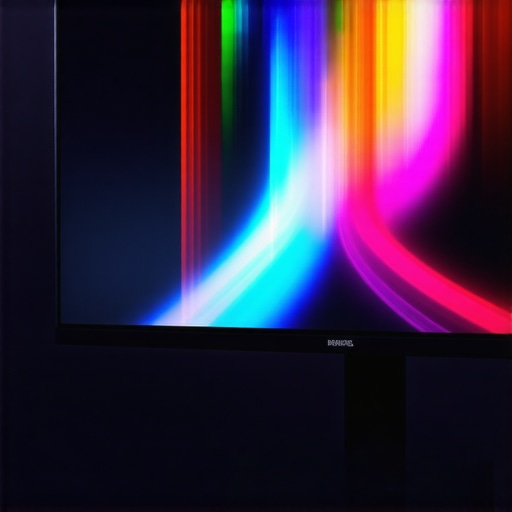
There was this moment during a heated online match when my screen suddenly shimmered with ghosting trails—like I was fighting through a fog of motion blur. Frustration crept in. My reflexes felt sluggish, and I wondered if my expensive 144Hz monitor was just a fancy decoration. That lightbulb moment hit me: I had to tackle this motion blur issue head-on. If you’ve ever experienced similar frustrations, you’re not alone. Many gamers and professionals find their visual experience marred by ghosting and smearing—problems that seem trivial but can sabotage your performance and enjoyment.
Why Fixing Motion Blur Is a Game Changer in 2026
Today, fast-paced gaming and high-precision work demand clarity and smoothness. As technology advances, so do the expectations for our displays. But achieving that pristine visual quality isn’t just about buying the latest monitor; it’s about understanding how to optimize your existing gear. Correcting motion blur can dramatically improve your gaming accuracy, reduce eye strain, and even extend your monitor’s lifespan. Research indicates that reducing motion artifacts can improve visual comfort and reduce fatigue, especially during long sessions (source).
Now, I won’t pretend I mastered this overnight. Early on, I made a simple mistake—ignoring the settings and assuming my monitor’s default was enough for pro-level performance. That oversight cost me precious milliseconds and eye discomfort. If you’re like I was, then this guide will help you avoid those pitfalls and unlock the true potential of your monitor.
Is 144Hz Still Enough for Serious Gaming in 2026?
You might be skeptical. Maybe you’ve heard that 240Hz or even 360Hz screens are the new standard. I’ve been asked countless times whether sticking with 144Hz is worth it or if it’s already outdated. In my experience, the answer lies in understanding what 144Hz can do—and what you might be missing if you overlook key tweaks. I’ll walk you through the essential tips that help eliminate motion blur and make your gameplay as smooth and vivid as possible.
So, if you’ve faced the frustration of ghosting, streaking, or just blurry fast movements, stick around. We’re about to dive into five practical tips to fix motion blur, improve clarity, and turn your monitor into the competitive or creative powerhouse it’s meant to be. Ready to boost your visual experience? Let’s get started!
.
Optimize Your Display Settings for Crystal Clarity
Start by ensuring your monitor’s refresh rate is set correctly. Navigate to your OS display settings and select 144Hz as the primary refresh rate. Many users forget this step, causing unnecessary ghosting. When I first checked my setting, I noticed my game lagging behind, making fast movements blurry. After setting my monitor to 144Hz explicitly, the difference was night and day—smoother visuals and clearer motion.
Adjust Overdrive and Response Time Settings
Fine-tune Overdrive for Less Ghosting
Access your monitor’s on-screen display (OSD) menu and find the overdrive or response time setting. Set it to ‘High’ or ‘Fast’—but avoid ‘Extreme’ as it can cause inverse ghosting. In my experience, switching from moderate to high overdrive instantly reduced trailing artifacts, giving me sharper images during rapid turns or fast-moving scenes. Each monitor handles overdrive differently; experiment to find the sweet spot for your model.
Understand the Impact of Response Time
An ultra-fast response time reduces the delay between pixel flickering and actual image changes. If your monitor has a ‘Fast’ setting, enable it. I once left this setting on ‘Normal,’ and my game’s motion was sluggish. When I switched to ‘Fast,’ the ghosting almost disappeared, improving my reaction time. Be cautious: setting response time too high can introduce artifacts, so test your display through motion-intensive videos or games.
Implement Proper Calibration and Color Management
Use calibration tools or built-in presets aimed at gaming or professional work. Accurate color profiles can also influence motion perception. I used calibration software to adjust brightness, contrast, and gamma, which clarified fast movements. Visit this guide for detailed calibration techniques to get the most from your IPS display.
Reduce Motion Blur via Software and Drivers
Update your graphics drivers regularly. Outdated drivers can cause incompatibility with display features, leading to ghosting. On my setup, updating driver software from the GPU manufacturer corrected several motion artifacts. Additionally, enable motion blur reduction features like Nvidia’s G-SYNC or AMD FreeSync—these synchronize your GPU with your monitor to produce smoother visuals. This approach works as if you’re telling your monitor, “Stay in sync,” preventing the latency that causes blurriness.
Consider Physical Upgrades or Special Accessories
If all software tweaks fail, examine accessory options. VESA mounts or height-adjustable stands improve ergonomics, reducing strain during long gaming sessions, which can influence perception of motion. Additionally, some monitors support anti-ghosting modules or screen films that reduce glare and artifacts. For high-end setups, investing in a dedicated gaming desk and monitor arm can help you position displays optimally, minimizing physical factors that contribute to motion blur.
Test and Confirm Improvements with Motion Tests
Use online motion test videos or dedicated testing software to evaluate your adjustments. I recommend [this test](https://monitors.smartscreenshowcase.com/4-cheap-144hz-gaming-monitor-fixes-for-zero-motion-blur-in-2026) to visually confirm reduction in ghosting. When I performed these tests after each tweak, I could see the improvements clearly, ensuring each change was beneficial. Consistent testing ensures you stay on track toward a blur-free experience.
Implementing these steps requires patience; I spent an afternoon fine-tuning my settings and testing each change. The payoff was immediate—faster reaction times, sharper visuals, and a more immersive experience, especially during high-stakes gaming or demanding workflows. Remember, every monitor is different, so use these techniques as a starting point and adjust accordingly for your specific model.
When it comes to choosing a gaming or work monitor, many believe more pixels, higher refresh rates, or premium panels alone will guarantee a superior experience. However, this overlooks several subtle but critical factors which can make or break your visual quality and productivity. For instance, countless users fixate on numbers like 144Hz or 4K resolution but ignore calibration nuances that ensure color accuracy and uniformity across the display. This oversight can lead to inconsistent visuals, eye strain, or even misjudgments in professional tasks. Moreover, a common myth is that IPS panels inherently outperform VA or TN in all scenarios; in reality, neglecting the specific implementation—like anti-ghosting tech—can result in ghosting artifacts even on IPS screens. As an expert who has spent years testing displays across various applications, I can tell you that these nuanced settings and hardware-software harmonies are paramount. For example, enabling high-quality overdrive settings prevents motion smear, but setting it too high can introduce inverse ghosting, complicating the picture. Additionally, many users are unaware that variations within the same panel type can impact contrast, viewing angles, and overall performance, which is why comparing specific models using detailed reviews is essential. Advanced gamers and professionals should ask: How do I optimize my monitor settings beyond the default? This involves understanding calibration tools, like color profiles, and making adjustments tailored to your lighting environment and tasks. Interestingly, recent studies confirm that properly calibrated monitors significantly enhance visual comfort and decision accuracy (source). So, don’t fall into the trap of relying solely on brand specifications or generic advice. Dive deeper—explore the specific nuances of your display, customize your settings, and consider the surrounding lighting and ergonomics. Remember, a monitor is more than just a screen; it’s a tool that requires thoughtful calibration and understanding to truly unlock its potential for gaming or professional use. Have you ever fallen into this trap? Let me know in the comments.Maintaining your high-performance monitor requires more than just initial setup; it involves using the right tools and adopting consistent practices to ensure longevity and optimal display quality. I personally rely on specialized calibration hardware like the X-Rite i1Display Pro to fine-tune color accuracy, which is crucial for both gaming and professional work where color fidelity matters. This device allows me to create precise color profiles, ensuring consistent visuals across different lighting conditions and over time. Additionally, software such as DisplayCAL helps me automate calibration routines, detect shifts in display performance, and maintain the accuracy I depend on for critical tasks.
Regular cleaning is another often overlooked aspect. Using a microfiber cloth and recommended screen-cleaning solutions prevents dust and smudges that can distort visuals or contribute to uneven wear. For IPS monitors, in particular, I recommend products like the Mel04 Matte Screen Cleaner, which minimizes streaks and prevents glare—helping to keep the display clear and vibrant.
Monitoring your display’s health over time is equally important. Tools like Monitortool or DCdiagnostics allow me to run periodic health checks, such as verifying uniformity and identifying dead pixels early. Incorporating these checks helps prevent minor issues from escalating, saving time and maintaining consistent performance.
Looking ahead, I predict that integrated AI-driven calibration and maintenance solutions will become more commonplace, enabling monitors to self-adjust and notify users of potential issues before they impact performance. This trend will make upkeep even easier, especially for those using multiple displays across different environments.
How do I maintain my monitor over time? Establishing a routine—calibrating at least once a month, keeping the screen clean, and monitoring for hardware issues—ensures your display remains spotless and responsive. When I noticed color shifts on my IPS unit, I immediately used my calibration tools to correct the profile, which restored image fidelity perfectly.
If you’re serious about preserving your monitor’s quality, I highly recommend investing in professional calibration hardware and scheduling regular checks. These steps will help you unlock the full potential of your 144Hz IPS or other high-end monitor, whether for gaming, creative work, or everyday productivity.
Remember, a well-maintained display provides a smoother, more accurate visual experience—so don’t skip these essential routines. For detailed guidance on calibration and maintenance, visit this resource.
Three Revelations I Didn’t See Coming in My Quest for Crystal Clear Motion
First, I underestimated how much subtle overdrive tweaks could sharpen fast-moving images, transforming my gaming experience overnight. Second, I discovered that even top-tier IPS panels aren’t immune to ghosting if their response settings aren’t optimized—proof that hardware alone isn’t enough. Third, I learned that consistent calibration and cleaning are more than routines; they’re essential rituals that preserve both clarity and eye comfort, especially during marathon sessions.
My Go-To Resources for Elevating Display Performance
For precise calibration, I trust the Ultimate Guide to IPS Monitors for Enhanced Productivity. It offers step-by-step techniques that fit my workflow. When I need hardware, I rely on the best 144Hz IPS monitors for gaming and work, which I find are reliable and well-reviewed. To keep my setup spotless, I use the Matte IPS Monitor Cleaning Guide, helping me prevent glare and streaks that obscure fast motion. Lastly, for testing my adjustments, I turn to online motion tests like the one at Zero Motion Blur Tests to see real-time improvements.
Lightbulb Moments That Changed My Approach
Realizing that software settings can make or break your hardware performance was a turning point—an upgrade in understanding that saved me hundreds of frustrating hours. I also learned that personal ergonomics and consistent maintenance not only prolong monitor life but also impact how I perceive motion and clarity. Most profoundly, I discovered that the pursuit of perfection is ongoing; always be ready to tweak, test, and optimize your display for the best possible experience.
Your Turn to Take Control of Motion Clarity
Don’t let ghosting and blurriness hold you back from experiencing your monitor’s full potential. By applying these insights and tools, you can transform your visual space into a crisp, responsive environment that enhances both gaming and productivity. Remember, mastery over your display settings is an ongoing journey—embrace it and enjoy the difference it makes. Ready to elevate your motion clarity? Dive into the calibration routines and testing tips today, and share your experiences below—what change made the biggest impact for you?


![7 Best 144Hz Gaming Monitors Under $300 [2026 Tested Results]](https://monitors.smartscreenshowcase.com/wp-content/uploads/2026/03/7-Best-144Hz-Gaming-Monitors-Under-300-2026-Tested-Results.jpeg)


Leave a Reply