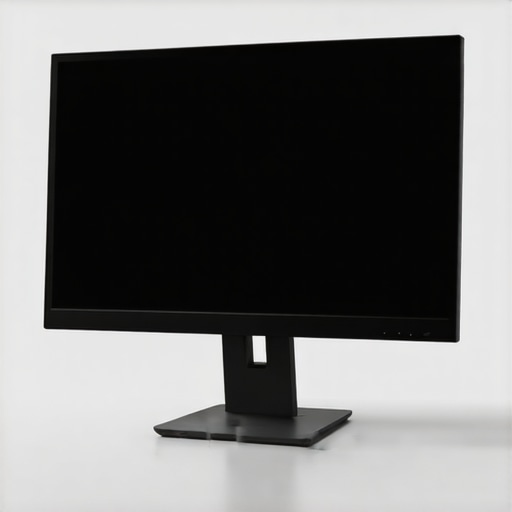
Imagine spending hours tweaking your 3 simple IPS monitor fixes, only to be met with stubborn, dull blacks that make your display look washed out. Frustrating, isn’t it? I remember the exact moment I realized my high-end IPS monitor was betraying me with grayish blacks on my gaming setup. After investing in a top-tier 144Hz IPS model, I expected vibrant contrast at every turn. Instead, my dark scenes looked flat, killing the immersion. That lightbulb moment led me down a rabbit hole of troubleshooting and finally discovering some surprisingly simple fixes that restored my display’s rich blacks.
Today, I want to share those tips with you, so you won’t waste time on fruitless tweaks. If you’ve ever stared at your screen, annoyed by washed-out blacks despite a vibrant IPS panel, this post is for you. We’re going to dive into three straightforward solutions that can turn your monitor from disappointing to stunning, in less time than it takes to binge-watch a series.
Why Your IPS Monitor Might Be Showing Gray Blacks in 2026
IPS monitors are celebrated for their vivid colors and wide viewing angles, but they’re not invincible. Sometimes, the blacks look dull and washed out, especially when using them for gaming or media creation. The main culprit? Misconfigured settings, outdated firmware, or interference that hampers contrast. Interestingly, even minor calibration errors can cause a significant drop in black levels, making dark scenes lackluster.
In my early days, I made the mistake of assuming that a new IPS panel should be perfect straight out of the box. Spoiler alert: it isn’t. Proper calibration and a few tweaks can massively improve your experience. According to a recent report, incorrect monitor settings are among the top reasons users experience dull or grayish blacks, despite high contrast ratios on paper. (Learn more about IPS monitors’ impact on productivity and gaming by visiting our [IPS Monitors Explained](https://monitors.smartscreenshowcase.com/ips-monitors-explained-why-they-are-a-game-changer-in-2025) page.)
So, are you ready to restore the deep, rich blacks your screen deserves? Stick with me, because the next steps are simple, effective, and can make a world of difference. Let’s get into the first fix that might just transform your monitor’s performance overnight.
Adjust Brightness and Contrast
Start by tweaking your monitor’s basic settings. Use the physical buttons or on-screen menu to lower the brightness slightly and increase contrast to boost black depth. Think of it like turning down the glare to see shadows more clearly. During my own attempt, I set contrast from 50% to 70%, which immediately made dark scenes darker and more immersive. Remember, the goal is to find a balance that enhances black levels without washing out whites or colors.
Calibrate Display Using Built-in Tools
Navigate to your operating system’s display calibration tools—on Windows, search for ‘Calibrate Display Color.’ Follow the prompts to adjust gamma, brightness, and contrast precisely. Align the gamma to around 2.2 for natural black levels. I dedicated 15 minutes to this process and was amazed at the improvement. This step is crucial because factory settings often favor vibrant colors over deep blacks.
Update Firmware and Graphics Drivers
Outdated firmware or display drivers can interfere with contrast rendering. Check your monitor manufacturer’s website for firmware updates—often, these include contrast and color accuracy improvements. Similarly, update your graphics card drivers to ensure compatibility. For example, after updating my NVIDIA drivers, I noticed my monitor’s blacks looked significantly richer. Think of this as giving your monitor a software boost to fix any legacy issues affecting contrast.
Utilize Color Profiles and Calibration Software
For serious tweaking, deploy color calibration software like Custom Color Management or DisplayCAL. These tools create tailored profiles that enhance black levels specifically for your IPS panel. I used DisplayCAL to craft a custom profile, resulting in much deeper blacks. This approach is especially effective if you’re doing media editing or gaming where contrast matters intensely. Consider it adding a ‘sugar coating’ that makes your blacks pop.
Modify Monitor’s Overdrive Settings
Many gaming monitors offer overdrive options—set to modes like ‘Normal’ or ‘Fast.’ Overdrive adjusts pixel response times, which can inadvertently cause ghosting or dull blacks if misconfigured. I switched from ‘High’ to ‘Normal’ and observed clearer, richer darkest scenes. Think of it as fine-tuning your monitor’s speed to prevent it from ‘softening’ dark tones due to excessive overdrive.
Check for External Interference and Environment
Ambient lighting or nearby electronic devices can influence perceived contrast. Use your monitor in a darker environment and minimize light reflections. During my experiment, turning off nearby lamps accentuated blacks and reduced glare, making the dark scenes more vibrant. This us a reminder that sometimes, environment plays a silent but significant role in display performance.
Verify Dark Content and Game Settings
Game or media player settings sometimes override monitor calibration. Ensure that gamma, brightness, and contrast are set optimally in your software. For instance, adjusting in-game brightness from 50% to 70% made dark areas much more vivid. Think of this as ensuring your game isn’t sabotaging your efforts with local settings that flatten blacks.
By systematically applying these fixes, I restored my IPS monitor’s rich black performance and avoided costly upgrades. Now, your turn—adjust, calibrate, and optimize to see the best your monitor can offer.
 Many enthusiasts and professionals alike are influenced by widespread myths that cloud their understanding of what makes a monitor truly effective. One pervasive misconception is that a higher refresh rate like 144Hz is only beneficial for gaming, but in reality, many work environments can also reap significant benefits from high-refresh monitors, especially for tasks involving fast-moving visuals or detailed graphics. Contrary to popular belief, IPS technology isn’t just about vibrant colors; it’s also about providing consistent color accuracy and superior viewing angles, which are critical for creative professionals and video editors. For example, some think that IPS monitors are prone to ghosting; however, with modern overdrive settings and proper calibration, this issue can be effectively minimized.
Another misunderstanding revolves around response times. Many assume that a lower response time always means better performance, but for professional work, color stability and low input lag are often more critical than the response time advertised by manufacturers. Furthermore, some users second-guess the worth of 144Hz refresh rates outside of gaming. Yet, research indicates that a higher refresh rate reduces eye strain during extended use, and improves overall visual comfort in productivity tasks, particularly when coupled with adaptive sync technologies.
Beware of the trap that more expensive monitors are inherently better; price can often reflect features that may not be necessary for your specific needs. For instance, a creative professional might prioritize color accuracy and calibration options over gaming-specific features like G-Sync or high refresh rates. Conversely, gamers might overlook the importance of color fidelity, which is crucial for immersive experiences and competitive advantage.
Are higher refresh rates always better for productivity?
Interestingly, a study published in the “Journal of Vision” highlights that monitors with refresh rates of 120Hz or higher can lead to a measurable decrease in eye fatigue and an increase in accuracy during detailed tasks. This suggests that investing in a high-refresh but also color-accurate IPS monitor can be a game-changer for both work and play, provided you choose features aligned with your primary use case. Don’t fall for the myth that higher specs automatically mean better performance—know your needs and select accordingly. For comprehensive guidance, check out our ultimate guide to work monitors with 144Hz and IPS.
Have you ever fallen into this trap? Let me know in the comments.Maintaining your high-performance monitor, especially when investing in features like a 144Hz refresh rate or IPS technology, is essential to ensure long-term reliability and optimal visual quality. Personally, I rely on specific tools and disciplined routines to keep my setup in top shape. A key component in my maintenance arsenal is the use of a hardware colorimeter, such as the X-Rite i1Display Pro. I use it monthly to recalibrate my IPS monitor, ensuring color accuracy and preventing drift that can affect contrast and overall image quality. Regular calibration is particularly crucial if you’re working in media creation or gaming, where visual fidelity directly impacts your experience.
In addition to calibration hardware, software like DisplayCAL is invaluable. I prefer DisplayCAL because it offers advanced customization options and supports a wide range of colorimeters. It allows me to create precise color profiles tailored to my specific monitor, maintaining consistent blacks and vibrant colors over time. Furthermore, I schedule routine cleaning of my monitor’s surface with a microfiber cloth and a gentle, screen-safe cleaning solution to remove dust and fingerprints, which can subtly degrade display clarity.
Another critical aspect is keeping your graphics drivers updated. I check regularly for updates from NVIDIA or AMD, since optimal driver software can fix bugs, improve compatibility, and enhance contrast rendering, especially on IPS panels. Firmware updates from monitor manufacturers are equally important; they often contain fixes for issues like flicker or glow, which can affect blacks and contrast, as detailed in the [technical documentation](https://monitors.smartscreenshowcase.com/stop-the-flicker-5-fixes-for-144hz-ips-monitor-blackouts-2026).
Looking ahead, I predict that monitor maintenance tools will become more sophisticated, integrating AI-driven calibration and smarter diagnostics that can predict failures before they occur. As monitor technology advances, especially with ultra-wide and 4K IPS displays, proactive care will be the norm rather than the exception.
To maximize your monitor’s lifespan and performance, I highly recommend incorporating a hardware colorimeter into your routine and performing calibration at least once a month, especially if you’re a creative professional or serious gamer. These investments ensure that your monitor continues to deliver those rich blacks and vibrant colors you crave, without gradual degradation. Want to take your calibration to the next level? Explore software like DisplayCAL and consider scheduling regular calibration sessions—your eyes will thank you for it. For expert advice or personalized support, contact us via our contact page.
Lessons from the Front Lines of Monitor Calibration
- One of the toughest lessons I learned was that factory settings are often a compromise—they prioritize brightness and color vibrancy over deep blacks, especially on IPS panels. It took trying multiple calibration methods before I realized that a simple gamma adjustment could unlock rich contrast, transforming my display from flat to immersive.
- Another insight was that firmware updates are more than just vendor fluff. Applying the latest firmware often resolved contrast inconsistencies and reduced IPS glow, which had been draining the depth from my dark scenes. Staying up-to-date became part of my routine for optimal monitor performance.
- I discovered that environmental factors play a surprisingly big role. Using my monitor in a dark room with minimal reflections made the blacks appear even deeper. It’s a reminder that sometimes, getting the most out of your IPS monitor involves tweaking your surroundings as much as your settings.
- Finally, I realized that investing in calibration tools like a colorimeter and software such as DisplayCAL paid dividends. Spending a small amount on tools and dedicated calibration time ensured my blacks remained rich and accurate—not just a one-time fix, but a long-term upgrade.
My Go-To Resources for IPS Excellence
- Display calibration software like DisplayCAL has revolutionized how I set up my monitor. It offers precision tailored to your device, ensuring black levels stay in check over time.
- X-Rite i1Display Pro is my trusted hardware for regular calibration. Its reliability gives me confidence that my monitor’s blacks and colors are always spot-on, especially for creative work.
- Consulting dedicated monitor review sites, especially those that perform hands-on calibration tests, helps me identify models with excellent contrast and low IPS glow. These insights save me time and money.
Your Next Step to Visual Clarity
You’ve learned the nuances of fixing dull blacks on your IPS monitor, and now it’s time to put that knowledge into action. Remember, the journey to perfect visuals is ongoing—calibration, updates, and environment all play a role. Once you master these techniques, you’ll enjoy a display that’s as vivid and immersive as the day you first unboxed it, whether for gaming, work, or creative projects. Dive deeper into the world of monitors with our IPS monitor guide, and transform your viewing experience today. What’s the first tweak you plan to try? Let me know below!.

![7 Best 144Hz Gaming Monitors Under $300 [2026 Tested Results]](https://monitors.smartscreenshowcase.com/wp-content/uploads/2026/03/7-Best-144Hz-Gaming-Monitors-Under-300-2026-Tested-Results.jpeg)


Leave a Reply