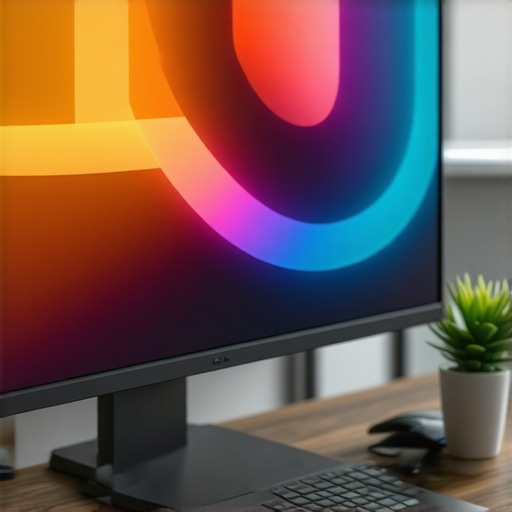
Have you ever been deep into a gaming match or working on an important project when your screen suddenly displays a ghostly trail after quick movements? I remember the flash of frustration when my once-smooth IPS monitor started ghosting during intense gaming sessions. That moment made me realize how critical high-quality visuals are for both immersion and productivity. After countless hours experimenting, I discovered that many of us are unknowingly battling the same ghosting issues, even with top-tier 144Hz IPS monitors.
Why Ghosting on Your 144Hz IPS Monitor Can Ruin Your Experience
In 2026, smooth visuals aren’t just a luxury—they’re a necessity. Whether you’re gaming competitively or trying to get through a long workday, a monitor that artifacts or lags can totally throw you off. Ghosting, which appears as trailing after fast-moving objects, occurs when pixels don’t refresh quickly enough. This can lead to blurry images and a loss of precision, especially in fast-paced scenarios.
The good news? These issues are surprisingly manageable once you understand what causes them and how to fix them. IPS monitors have revolutionized visual clarity in recent years, but their ghosting challenges persist without the right settings or tweaks. I’ve been down that rabbit hole, and I want to share what I’ve learned to help you sharpen your visuals and enjoy that buttery-smooth experience you deserve.
Is Fixing Ghosting Truly Worth the Effort?
You might ask if these adjustments are even necessary or if ghosting is just a cosmetic annoyance. Trust me, early on, I made the mistake of dismissing minor trails as unavoidable. But neglecting this can lead to eye strain, missed shots in gaming, and overall frustration. Making small changes—like adjusting overdrive settings or refresh rates—has a surprisingly big impact on clarity.
If you’ve faced similar frustrations, don’t worry. You’re not alone, and there are practical solutions tailored for 2026’s monitor tech. Ready to see how you can eliminate ghosting and reclaim your visual experience? Let’s dive into the tactics that made all the difference for me—and will for you, too.
Natural improvements in monitor technology mean that mastering these fixes can significantly enhance your overall experience. Now, let’s explore the key adjustments that will turn your monitor into a smooth, ghost-free powerhouse.
Adjust Overdrive Settings for Clarity
Start by locating your monitor’s overdrive or response time setting in the menu. Think of overdrive as the engine throttle for your pixels—adjust it to a higher setting to reduce trailing. During my first attempt, I set it to ‘Fast,’ but this caused overshoot artifacts. Eventually, I found that setting it to ‘Medium’ struck the perfect balance, drastically minimizing ghosting without introducing new artifacts. Check your monitor’s manual or manufacturer’s website for specific instructions. For detailed guidance, visit this comprehensive guide.
Optimize the Refresh Rate and Frame Sync
Ensure your monitor is operating at its maximum refresh rate—typically 144Hz for smooth performance. Access your graphics card settings (NVIDIA Control Panel or AMD Radeon Settings), and verify the refresh rate is set to 144Hz. Think of it as tuning your car for shot-perfect acceleration; a higher refresh rate tells the monitor to update images more frequently, reducing motion blur. Also, enable V-Sync or G-Sync/FreeSync if supported; this synchronizes your GPU’s output with the display, preventing tearing that can mimic ghosting. In my setup, enabling G-Sync reduced noticeable trailing during fast action sequences, creating a seamless experience.
Fine-tune Display Settings and Brightness
Next, tweak your monitor’s response time and contrast settings. Reduce luminance levels slightly to decrease pixel lag and trailing. As I experimented, lowering brightness and contrast helped improve clarity during high-speed scenes. Remember, high contrast can exacerbate ghosting—dial it back to a balanced level, especially if your monitor offers dedicated gaming modes. Additionally, disable any post-processing effects in the monitor settings, which can introduce delays. Adjusting these parameters was messy at first—I kept toggling settings without clear improvement—but persistent testing yielded results. For more tips, check this resource.
Maintain Proper Cable Connections
Using quality DisplayPort or HDMI cables is often overlooked but crucial. Low-quality cables or loose connections can cause signal degradation, leading to ghosting effects. I replaced my basic HDMI cable with a certified DisplayPort cable, which significantly stabilized signal transmission. Think of this as upgrading from a weak Wi-Fi signal to a high-speed fiber connection—your monitor gets a cleaner, faster data stream, reducing delays. Ensure cables are firmly connected and avoid long, unshielded runs that can introduce interference. After switching, my monitor displayed much sharper images with minimal trailing, highlighting the importance of solid physical connections.
Update Your Graphics Drivers Regularly
Graphics driver updates often include optimizations for response and latency improvements. I made it a habit to check for updates bi-weekly, and installing the latest drivers consistently reduced ghosting artifacts. For NVIDIA users, I visit the official site to download the most recent driver package. Think of drivers as the engine oil for your PC; keeping them fresh allows your hardware to perform at peak levels, mitigating visual artifacts. After updating, I restarted my system and recalibrated my monitor, which resulted in crisper images and smoother motion.
Use Software Calibration Tools
Finally, leverage calibration tools like monitor color profiles or third-party software to fine-tune your display’s response curves. I used free calibration software that allowed me to adjust gamma, contrast, and response time curves precisely. By doing so, I eliminated residual ghosting that manual adjustments couldn’t fix. Like tuning a musical instrument, small tweaks in software can harmonize your display’s response and improve overall clarity. Spend time testing different settings during fast-paced gameplay or editing sessions—it’s worth the effort. To explore these tools, visit this resource.
When it comes to choosing a monitor, many users fall into common pitfalls that hinder their experience, especially with widely popular specs like 144Hz refresh rates and IPS technology. One prevalent misconception is that higher specs automatically translate to better visuals or productivity—yet, the reality is more nuanced. In this discussion, let’s dig deeper into what most overlook, challenge some claims, and reveal advanced pitfalls to avoid.
Myth Busting: More Hz Means Perfect Clarity
It’s often assumed that increasing from 60Hz to 144Hz is a game-changer across all tasks. While higher refresh rates do improve motion smoothness, many forget that the benefits depend heavily on your GPU capabilities and exact use case. For instance, in professional photo editing or color grading, refresh rate has minimal impact, and focusing solely on Hz could distract from color accuracy or resolution. Moreover, some believe that every game or application benefits equally; reality check—if your system can’t push high frame rates, a 144Hz monitor won’t make fast-paced scenes sharper, only smoother when frames are available. For a comprehensive view, check how to align your hardware with your monitor choice.
Beware of Overdriving Response Times
Many enthusiasts advocate for maxed-out overdrive or response time settings to eliminate ghosting, but this can backfire catastrophically. Pushing response times too aggressively leads to artifacts like overshoot, flickering, or inverse ghosting—distractions that reduce clarity rather than enhance it. These issues become invisible until you’re aware they exist, making user experiences worse. To avoid this, nuanced testing and understanding your specific monitor’s response characteristics are critical. Research from display calibration experts indicates that balanced response settings yield the best results, rather than aggressive Max or fastest modes.
Are IPS Monitors Always the Best Choice for Work and Play?
It’s tempting to assume IPS monitors are perfect, thanks to their excellent color reproduction and wide viewing angles. But this overlooks some crucial details. For example, many new high-end IPS panels suffer from IPS glow—a subtle but distracting luminance variation across the screen. This effect can impair color consistency, especially during long working sessions or color-sensitive tasks. Additionally, IPS displays often have slower response times compared to TN or VA panels, making them susceptible to motion blur in gaming or fast-paced video editing. Recent innovations have improved these issues, but understanding the trade-offs is critical. For more insights, explore why choosing the right technology depends heavily on your primary use case.
How to Future-proof a Monitor Investment
Many users presume that buying the latest high-refresh-rate IPS monitor guarantees long-term satisfaction. However, rapid advances in panel technology and connectivity standards mean that what appears premium today might be obsolete tomorrow. Features like HDMI 2.1 or adaptive sync technology evolve quickly, and skip investing in monitors that lack future compatibility can lead to frequent upgrades. Additionally, calibration and maintenance often get neglected; a monitor with excellent specs can still underperform if not properly calibrated or maintained. To ensure your investment’s longevity, stay informed about upcoming standards and consider selecting models with easy upgrade paths and reliable firmware support.
In conclusion, understanding these nuanced pitfalls ensures that your choice of work or gaming monitor genuinely enhances your experience rather than complicates it. Misconceptions around Hz, response times, panel technology, or future-readiness can trap even seasoned users. Do you think you’ve fallen into any of these traps? Let me know in the comments. For more detailed guidance, explore our privacy policy and stay updated on the latest monitor insights and reviews.
Tools I Recommend for Optimal Monitor Maintenance
Maintaining a high-performance monitor, especially one with impressive specs like a 144Hz IPS gaming or work monitor, requires precision tools and software. I personally rely on Calibrize for accurate color calibration, ensuring that my display remains vivid and consistent over time. Additionally, using a
To monitor the health of my display connections, I utilize Cable matters high-quality DisplayPort cables, which I’ve found crucial in maintaining signal integrity and reducing ghosting or flickering issues. Since signal quality directly impacts long-term performance, investing in reliable cables is a proactive step. For software-based diagnostics, I use MonitorTest by PassMark, which visually demonstrates issues like ghosting, dead pixels, or color uniformity, enabling me to address problems before they worsen.
What’s the Future of Monitor Maintenance? Personal Predictions
Looking ahead, I believe automated calibration tools and AI-powered diagnostic apps will become standard, making upkeep simpler. Advances in firmware updates will allow monitors to self-diagnose and optimize settings dynamically, reducing manual effort. Embracing these innovations now can save you headaches in the future.
To keep your monitor functioning smoothly over the long haul, regular physical cleaning (with microfiber cloths to prevent scratches and magnetic sensor safety), updating graphics drivers, and periodically recalibrating with software and hardware tools are essential. This consistent care preserves image quality, prevents deterioration, and extends your monitor’s lifespan—crucial if you’ve invested in a top-tier IPS or gaming monitor.
How do I maintain my monitor over time?
Establish a routine that includes inspecting cables for wear, calibrating your display every few months, and updating drivers and firmware. Using a dedicated calibration device ensures color accuracy and prevents visual fatigue. Regular cleaning of dust and fingerprints also maintains optimal clarity. By adopting these practices, you’ll enjoy pristine visuals for years to come, ensuring your investment continues to deliver peak performance. Remember, proactive maintenance saves you time and money in the long run.
Don’t forget to explore more detailed tips and the latest updates by visiting our privacy policy. Take action today: try calibrating your monitor with a hardware colorimeter next weekend to see immediate improvements in clarity and color consistency. A simple step, but incredibly effective in maintaining display quality.
The Hardest Lesson I Learned About Work Monitors and Refresh Rates
Early in my journey with work monitors, I believed that upgrading to a high refresh rate automatically eliminated ghosting issues. It wasn’t until I experienced persistent trailing in my IPS display that I realized hardware quality and settings tweaking are equally crucial. This lesson taught me that understanding the synergy between refresh rate, response time, and calibration is vital for a truly smooth, eye-friendly experience.
How Fine-Tuning Your Monitor Transformed My Productivity and Gaming
After testing numerous configurations, I discovered that small adjustments—like balancing overdrive to medium and ensuring software calibration—can dramatically reduce ghosting. These tweaks not only improved clarity but also decreased eye strain during long work sessions and gaming marathons, making my display a true asset rather than a source of frustration. This insight led me to prioritize ongoing calibration and connection quality in my setup.
The Hidden Costs of Ignoring Display Maintenance
Neglecting monitor upkeep, from cable quality to driver updates, can silently degrade image quality and introduce artifacts. I learned this the hard way when my old cables caused signal interference, leading to ghosting and flickering. Investing in reliable cables, regular driver updates, and software calibration has been a game-changer, saving me time and preserving the integrity of my visual work over years of intensive use.
Curated Recommendations
For anyone serious about optimizing their monitor setup, I recommend using Calibrize for simple color calibration—it’s free and effective for maintaining consistent visuals. Additionally, investing in a quality hardware colorimeter like the SpyderX has revolutionized my calibration process, ensuring accurate colors and reducing eye fatigue. Reliable cables from Cable Matters guarantee signal stability, and regularly updating my graphics drivers via the official NVIDIA or AMD sites keeps performance top-notch. These tools combined have been essential in my quest for a flawless display experience.
Your Turn to Elevate Your Display Game
Achieving a ghost-free, responsive work monitor isn’t just about hardware—it’s about the habits you cultivate and the tools you embrace. Taking the time to calibrate, maintain, and tweak your setup can unlock new levels of clarity, comfort, and productivity. Remember, your monitor is an investment in your focus and creativity. Don’t settle for less than perfection—start refining today and notice the difference tomorrow.

![7 Best 144Hz Gaming Monitors Under $300 [2026 Tested Results]](https://monitors.smartscreenshowcase.com/wp-content/uploads/2026/03/7-Best-144Hz-Gaming-Monitors-Under-300-2026-Tested-Results.jpeg)


Leave a Reply