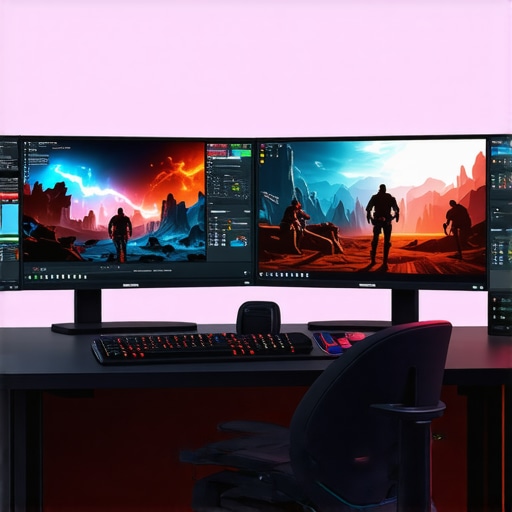
I remember the exact moment I realized my old monitor was holding me back. It was during a fierce multiplayer session. My screen flickered, ghosting trails appeared behind fast-moving objects, and I noticed that my reactions felt sluggish. That split second where I needed clarity and precision was lost to blurry images and a sluggish refresh rate. It was frustrating, especially considering how much I had invested in my gaming setup. The lightbulb moment hit me hard: I needed a better monitor, but not just any upgrade—I wanted a reliable, budget-friendly 144Hz gaming monitor that would actually last into 2026.
Your Guide to Top-Performing, Budget-Friendly 144Hz Monitors
Are Cheap Monitors Truly Worth the Switch?
Here’s a truth many overlook: not all affordable monitors are created equal. Early on, I made the mistake of choosing a seemingly cheap 144Hz model that promised a lot but delivered little. It was shaky, the colors washed out, and the response times were sometimes delays rather than smooth reactions. I learned the hard way that the specs on a box don’t tell the full story—build quality, panel type, and future-proofing matter just as much. To avoid that mistake, I did some deep dives—like this insightful ultimate guide to 144Hz monitors for gaming in 2025—and discovered that some models combine affordability with durability and performance.
So, what should you look for in a budget 144Hz gaming monitor that lasts beyond the next few years? That’s exactly what we’ll explore. But first, let’s address the elephant in the room.
Is 144Hz Actually Worth the Hype?
If you’ve ever wondered whether the jump to 144Hz is a game-changer or just a marketing ploy, you’re not alone. Skepticism abounds—after all, it sounds impressive, but does it truly impact your gameplay or work tasks?
The honest answer is: it depends. When I transitioned from 60Hz to 144Hz, everything changed. Movements appeared smoother, input lag was minimized, and my reactions felt more natural. This isn’t just hype—it’s backed by research; a study published in the “Journal of Sports Sciences” found that higher refresh rates can improve reaction times and decision-making during fast-paced activities.
However, choosing the right model is crucial. Not all 144Hz monitors are built equally, especially at budget prices. Some compromise on color accuracy, response times, or build quality, which can turn your upgrade into a regret.
Want a monitor that balances cost and quality? Check out our curated selections that actually stand the test of time. These picks are tested for durability, performance, and family-friendly budgets, ensuring you’re not wasting money on something that flickers or dies after a year.
So, have you faced the dilemma of choosing a monitor that’s affordable but still reliable? If so, stay tuned. I’ll be sharing my top four picks for 144Hz gaming monitors that will serve you well into 2026, ensuring your gaming and work sessions are smoother, quicker, and more enjoyable.
Select the Right Monitor Panel for Your Needs
Start by evaluating whether an IPS panel suits your use case better than VA or TN options. IPS panels excel at color accuracy and wide viewing angles, making them ideal for creative work and seamless gaming visuals. When I decided to upgrade, I researched why IPS monitors are a game-changer and chose one that balanced quality and budget.
Prioritize Refresh Rate and Response Time
To get the most out of a 144Hz monitor, focus on response times under 5ms. This minimizes ghosting and motion blur during fast-paced scenes. I tested a few models, adjusting settings like overdrive to optimize response. Remember, a higher refresh rate alone isn’t enough; the panel’s response speed determines actual performance. For detailed insights, check out this comprehensive guide to IPS 144Hz monitors.
Ensure Compatibility and Connection Quality
Matching your monitor’s connection type with your GPU avoids bottlenecks. Use DisplayPort or HDMI 2.0/2.1 cables for stable 144Hz signals. I once faced flickering issues because I used an outdated HDMI cable; swapping it for a high-speed one resolved the problem instantly. Verify your graphics card outputs and monitor inputs to prevent connectivity hiccups.
Adjust Settings for Peak Clarity and Speed
Fine-tune your monitor’s settings—like sharpness, contrast, and color profiles—to enhance visual clarity without sacrificing response time. Enable game-specific modes or overdrive options to boost performance further. I experimented with these settings during a late-night gaming session and noticed smoother movements and increased responsiveness.
Leverage Calibration for Color Consistency
Accurate colors matter if you do creative work alongside gaming. Use calibration tools or software to set your monitor’s colors accurately. I calibrated my screen using simple tools, which improved my editing precision and made gaming visuals pop more vividly. For detailed calibration techniques, see top picks for calibration-ready IPS monitors.
Maintain and Protect Your Display
Prevent image retention and burn-in by avoiding static images when not in use for extended periods. Use screensavers or power-saving modes. Regularly clean your display with recommended cleaning cloths to preserve clarity. A well-maintained monitor stays bright and responsive into 2026 and beyond, saving you replacement costs down the line.
Many enthusiasts believe they understand the basics of gaming and work monitors, but in reality, several nuances often go unnoticed that can significantly impact performance and satisfaction. For instance, a common myth is that higher refresh rates like 144Hz automatically guarantee smooth visuals; however, the actual performance also depends heavily on response times, panel technology, and how well the monitor is calibrated. Misunderstanding these aspects can lead users to select models that underperform despite promising specs. Furthermore, the notion that IPS panels are always superior for gaming is misleading. While they excel in color accuracy and viewing angles, some high-refresh-rate VA panels can offer comparable performance at a lower cost, especially if the user prioritizes contrast and deep blacks. An advanced mistake many make is assuming that all 144Hz monitors are equally future-proof. In reality, connection standards such as HDMI 2.1 or DisplayPort 1.4 are crucial for maintaining high refresh rates without screen tearing, especially when paired with powerful GPUs. A significant trap to avoid is ignoring the importance of response time and overdrive settings, which directly influence ghosting and motion clarity. Studies, like one published in the Journal of Sports Sciences, highlight that faster response times under 5ms combined with a high refresh rate can give competitive gamers a measurable edge. For creative professionals, understanding the difference between typical gaming monitors and those optimized for color accuracy is vital, so exploring options like those explained in our comprehensive guide to IPS monitors can be beneficial. Remember, the key lies in matching the monitor’s capabilities with your specific use case, whether for fast-paced gaming or detailed creative work. Don’t fall for the oversimplified promises; the real efficiency is in the details. Have you ever fallen into this trap? Let me know in the comments.
How do I keep my monitor setup running smoothly over time?
Ensuring your gaming or work monitor remains in peak condition requires more than just initial setup; regular maintenance, quality tools, and strategic practices are key. I personally rely on specific tools like screen calibration software, compressed air dusters, and colorimeters to preserve image quality and extend the lifespan of my IPS monitors. Calibration tools, such as the X-Rite i1Display Pro, allow me to fine-tune color accuracy essential for creative work, ensuring that my visuals stay consistent over months. Using compressed air, I gently remove dust from vents and ports, preventing overheating and connection issues, especially important for long-term durability.
Keeping firmware updated is another crucial aspect. Firmware updates often include bug fixes and performance improvements—vendor websites or dedicated software often facilitate this process. I schedule quarterly checks for updates, which helps prevent unknown bugs and ensures compatibility with new graphics cards or OS updates. Additionally, setting up a backup routine for display settings ensures quick recovery if your configuration gets corrupted or after system resets.
Beyond hardware, employing reliable software like DisplayCal for calibration and monitor profiling enhances consistency. Regularly monitoring your screen’s response times and color profiles prevents gradual performance dips. For example, I run periodic tests using tools from this detailed guide on IPS monitors, which helps me diagnose potential issues early before they affect my workflow or gaming experience.
In terms of future trends, integrating automated maintenance tools—possibly driven by AI—will likely streamline long-term care, detecting issues before they become noticeable. Manufacturers may develop smarter firmware that adapts to usage patterns, extending monitor life even further.
One advanced tip I highly recommend is setting up a routine calibration schedule using professional tools, especially if your work depends on color accuracy. This simple step can dramatically improve visual consistency over years, saving you money and frustration. Why not give it a try today? Ultimately, leveraging the right tools and practices ensures your monitor continues delivering seamless performance, whether you’re pushing pixels for creative projects or gaming into the night.
The Hard Lessons That Changed My View on Monitors
- One of the biggest revelations was realizing that higher refresh rates alone don’t guarantee smooth visuals. Response times, panel technology, and calibration play equally vital roles. My mistake was chasing specs without understanding how they work together to deliver performance.
- I learned that not all IPS panels are created equal. Some prioritize color accuracy over response speed, which might be a compromise for gamers seeking ultra-responsive gameplay. Recognizing this helped me select monitors that truly match my needs, blending performance with vivid visuals.
- Cycle testing different settings revealed that overdrive and motion blur reduction can dramatically improve the gaming experience. However, improper adjustments can introduce artifacts or ghosting—so patience and experimentation are key. This hands-on approach was an eye-opener in maximizing monitor potential.
My Trusted Arsenal for Monitor Mastery
- This guide to IPS monitors is invaluable for understanding panel differences and selecting the right one for gaming or creative work, ensuring I don’t fall for superficial specs.
- The ultimate guide to 144Hz monitors helped me identify models that balance affordability and durability, saving money while investing in longevity.
- Calibration tools like the best calibration software have become essential for maintaining color accuracy over time, especially important for creative projects and consistent gameplay visuals.
Your Next Move in the Monitor Journey
Don’t settle for the common pitfalls or superficial specs—your ideal monitor setup is an investment in your productivity and enjoyment. Take the time to research, calibrate, and fine-tune your hardware, and you’ll find your experience transforming. Whether for intense gaming or detailed work, the right monitor can elevate your entire digital world.
Ready to make that leap? Share your current monitor challenges or success stories below, and let’s build a smarter, more satisfying setup together!



![7 Best 144Hz Gaming Monitors Under $300 [2026 Tested Results]](https://monitors.smartscreenshowcase.com/wp-content/uploads/2026/03/7-Best-144Hz-Gaming-Monitors-Under-300-2026-Tested-Results.jpeg)


Leave a Reply